
How to Get Band 8.0+ in IELTS Listening
Practical, proven tips from a native-English perspective to score Band 8.0+ in IELTS Listening and build stronger real-world listening ability.
This post is also available in ja| vi

Marley Mulvin Broome
Founder and CEO of Freelight Software, passionate about making English learning accessible to everyone through AI technology.
Published February 21, 2026
7 min read
In this article, I will share practical tips to get Band 8.0+ in IELTS Listening from a native-English perspective, along with scientifically proven ways to improve your listening ability itself.
In fact, among all IELTS sections, listening is the easiest section to improve. So if you are aiming for Overall Band 7.0 or 8.0+, this is where you should secure points.
Based on this content, I also made a YouTube video in English.
It can also be good listening practice, so I highly recommend it.
IELTS Listening Overview
First, let’s quickly review the format of the test.
IELTS Listening is the same for Academic and General Training. There are 4 parts, and each part has 10 questions.
Part 1 A conversation between two people, often phone calls, with everyday topics like bookings or service inquiries.
Part 2 One speaker explains information. Common topics include tour guidance, instructions, rules, or facility information.
Part 3 An academic discussion among 2 to 4 people, often students talking to each other or with a tutor.
Part 4 A lecture-style monologue by one speaker on academic themes such as history, environment, or science.
The test is about 30 minutes long. In paper-based IELTS, you get an extra 10 minutes to transfer answers to the answer sheet. In computer-based IELTS, you do not get those 10 minutes, but you get a 2-minute review time at the end.
The audio is played only once. You will hear various accents including British, Australian, New Zealand, and North American, but British English is the most common.
Now that you understand the format, let’s get to the main points.
#1 Choose Computer-Based IELTS
In computer-based IELTS, you can use noise-cancelling headphones. You can maintain concentration without surrounding noise and listen with more stable audio quality.
In listening, this makes a bigger difference than most people expect.
On the other hand, in paper-based IELTS, audio quality depends on the test venue.
If you take paper-based IELTS and the audio was clearly hard to hear, report it to staff immediately after the test. Depending on venue policy, refunds or a free retest may be possible.
#2 Immersion
To improve listening, immersion is essential. IELTS uses natural native speech.
Do not only listen to materials for English learners. Make sure you also listen to content made for native speakers (podcasts, dramas, movies, etc.).
Native speakers do not talk like textbooks. They connect sounds and reduce sounds.
If you expose yourself to real English every day, you will naturally become better at catching these patterns.
Also, native-level content is often faster and harder than IELTS audio. So if you regularly listen to that, IELTS audio will feel easier.
IELTS covers a wide range of topics, from hotel bookings to climate change, so consuming diverse content also builds topic-specific vocabulary.
#3 Shadowing
Shadowing is a scientifically proven method that improves both listening and speaking. You listen to native audio and repeat almost at the same time.
Match the rhythm, speed, and pronunciation as closely as possible.
If you do this with subtitles or a script, you can also understand the content more accurately.
#4 Watch Out for Spelling Mistakes
This is very simple, but often overlooked.
Even if you know the correct answer, a spelling mistake makes it wrong. Even native speakers make spelling mistakes, so be careful.
A common question is whether British and American spelling differences are allowed. Yes, both are fine as long as the spelling is correct in that variety.
In IELTS Listening, proper nouns like Newton or Oxford appear often. In many cases, the speaker says the name and then spells it only once, so listen very carefully.
Also, when reading numbers, speakers sometimes say “O” instead of “zero.” For example, “O-seven” means “0-7.”
#5 Singular or Plural?
Always check singular vs. plural. After writing your answer, quickly read the whole sentence again and check grammar.
Example: “She needs ___.”
Is it apple or apples?
If it is “She needs an ___.” then apple is correct. If there is no article, or the verb/context indicates plurality, apples is more likely.
Many test takers lose points not because they failed to hear the audio, but because they skipped grammar checking.
#6 Do Not Panic If You Miss Something
This is one of the most important points.
Even if you do not know a word or miss one question, do not panic. Many people lose the next 3 questions while being stuck on one.
If you miss something, switch immediately and focus on the next item. Staying calm prevents small mistakes from becoming major failures.
These are the key points for getting Band 8.0+ in IELTS Listening.
If your English foundation is solid, it is absolutely possible to get Band 7.0 or 8.0+ in IELTS Listening without excessive test tricks.
If your current listening score is below Band 7.0, instead of obsessing over IELTS-specific tactics, focus on improving your core English ability. When your English improves, your IELTS score rises naturally.
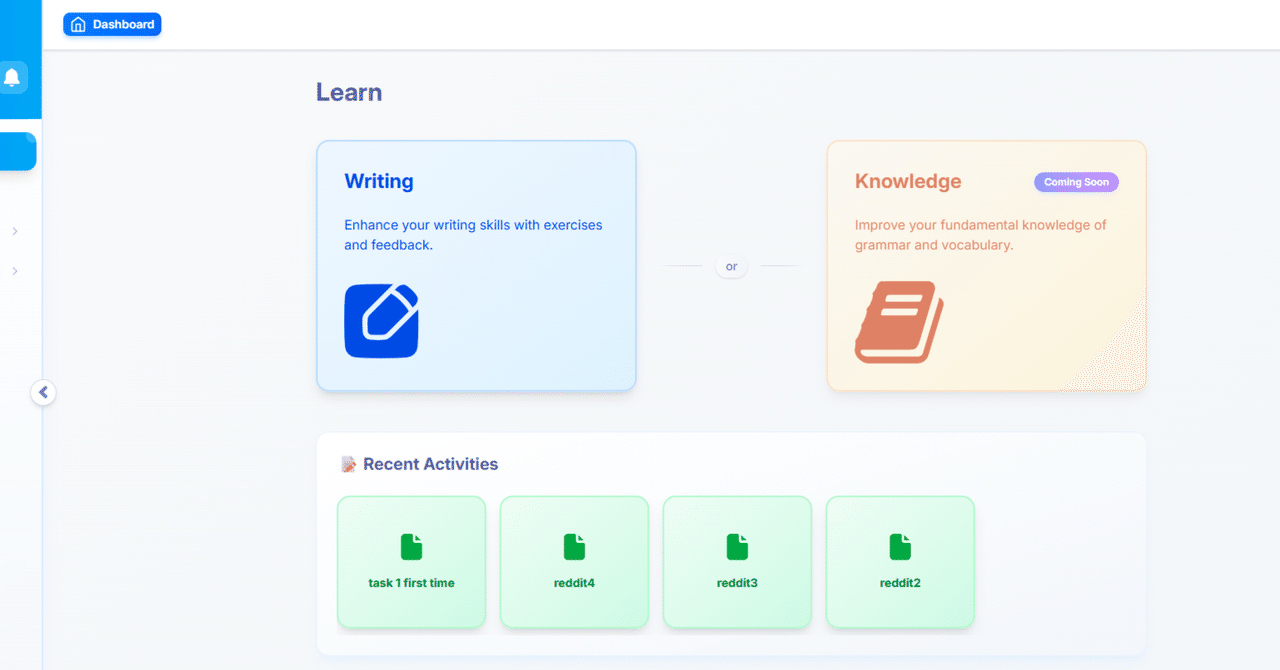
By the way, I am currently developing a writing correction tool for IELTS learners. If you are interested, please check the link below.
Related Posts
How to Get Band 7.0+ in IELTS Writing
Practical, score-raising tips to break out of Band 6.0-6.5 and reach Band 7.0+ in IELTS Writing for both Academic and General test takers.

How to Improve Your Typing Speed for IELTS Computer-Based Test
Learn simple techniques to type faster for IELTS CBT. Master finger placement, practice touch typing, and boost your writing scores with faster typing skills.

How to Start Studying for IELTS: Complete Beginner's Guide 2025
Learn how to start your IELTS preparation with this step-by-step guide. Get practical tips, study plans, and resources to achieve your target Band score.